Logistics software is no longer just an operational tool. In many organizations, it determines whether processes scale—or break. Companies still managing transport, warehouse, and yard operations with fragmented systems or manual workflows lose not only efficiency but, more importantly, decision speed. Modern logistics software changes exactly that. It connects data, automates workflows, and creates transparency where uncertainty used to dominate. The result: logistics becomes controllable—and therefore strategic.
What Defines Modern Logistics Software?
The difference today is less about features and more about approach. While traditional software solves isolated problems, modern logistics software connects processes across system boundaries. It integrates ERP, TMS, WMS, and yard management into a shared data foundation.
This creates a continuous flow of information. Decisions are no longer based on fragmented data but on a consistent end-to-end view. That’s the shift from operational administration to active control.
Which 5 Use Cases Deliver the Biggest Impact?
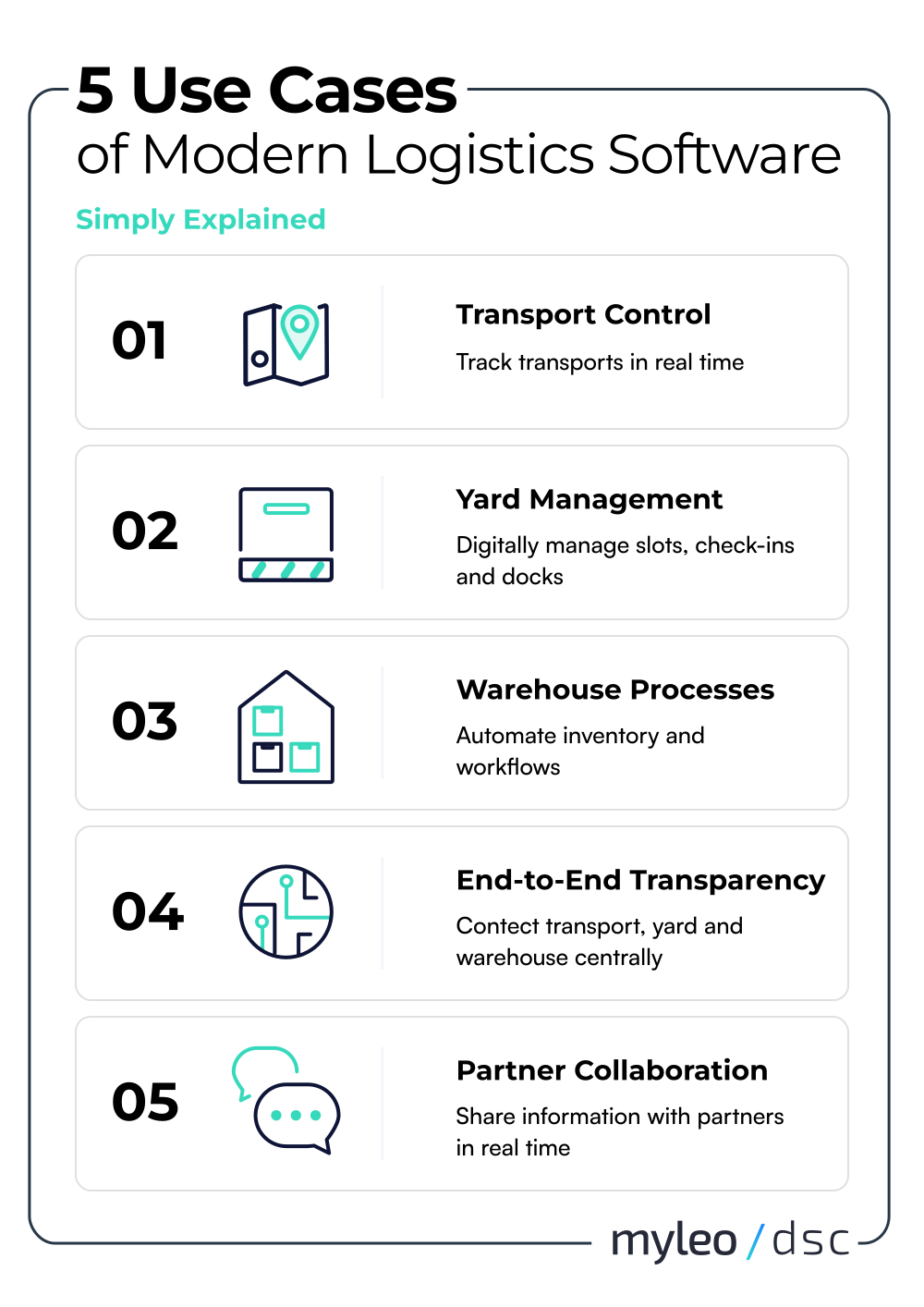
Transparent Transport Control
Without visibility into ongoing transports, planning remains guesswork. Modern logistics software provides real-time data on positions, delays, and ETAs—enabling teams to act early instead of reacting late.
Digital Yard Management
The yard is often the invisible bottleneck. Software enables digital check-ins, automated slot booking, and clear dock orchestration—reducing waiting times and increasing throughput.
Automated Warehouse Processes
Speed defines efficiency in the warehouse. Logistics software provides accurate inventory visibility, optimized pick paths, and automated postings—reducing errors and boosting throughput.
End-to-End Transparency
The biggest leverage comes from connecting the dots. Transport, yard, and warehouse are no longer managed separately but as one system. Companies can identify dependencies and optimize holistically.
Real-Time Collaboration with Partners
Delays often stem from poor coordination. Platform-based solutions enable real-time data sharing with carriers, suppliers, and customers—reducing friction and improving predictability.
Why Do Many Software Projects Fail—and What Do Successful Companies Do Differently?
Many organizations start with the wrong mindset: they look for software to digitize existing processes instead of challenging those processes. The result is complexity without real value.
Successful companies take a different route. They think in processes, not tools. They choose platforms over point solutions and build a central data layer. Most importantly, they start pragmatically—with clear use cases and quick wins.
What Role Do Platforms Like myleo / dsc Play?
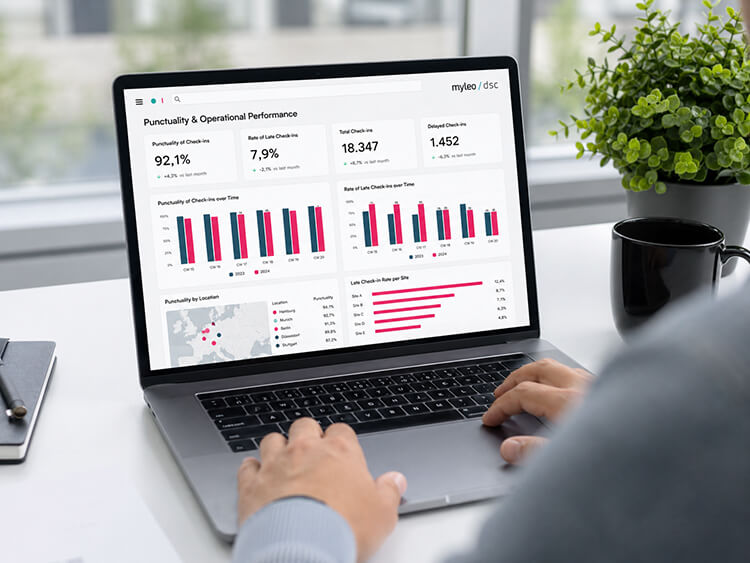
Solutions like myleo / dsc go beyond feature sets—they orchestrate logistics end-to-end. Transport, yard, and warehouse operations are connected on a single platform.
Data is created once and used throughout the process chain. Workflows run across system boundaries. The outcome is not just visibility but real control.
Where Is Logistics Software Headed?
Logistics software is becoming increasingly intelligent. Artificial intelligence augments decisions, automation reduces manual work, and IoT continuously feeds real-time data. The direction is clear: toward self-steering systems. Software will not only support operations—it will actively drive them.
Conclusion: Why Logistics Software Becomes a Competitive Advantage
Logistics software is no longer an IT topic—it’s a core business capability. Companies that digitize, connect, and automate their processes gain speed, transparency, and control. The question is no longer whether to use logistics software—but how far you take it.
You might also like
Yard Logistics 2030 is Highly Automated and Driverless
Logistics and yard management are increasingly becoming a success factor. However, without investment in digitalization and automation, it will not be possible to tackle the challenges of the future.
Intelligent Yard Logistics: Creating a Smart Yard with Digital Workflows
Smart Yard for optimal yard logistics: Keep all logistics partners on board and improve your own performance at the same time.