If you take a closer look at your site logistics, the yard is where everything comes together—and often falls apart. Planning meets reality, systems meet people, and data meets gut feeling. Many companies optimize transport and warehouse operations but leave this critical area semi-analog. The result is familiar: waiting times, coordination chaos, and a lack of transparency. The good news: this is exactly where IoT hardware creates the greatest impact—when applied along a clearly defined process.
What Does a Typical Yard Process Look Like—and Where Does Automation Apply?
Let’s walk through the process end to end—not in theory, but as it happens every single day.
1. Arrival at the Gate: From Bottleneck to Automated Entry
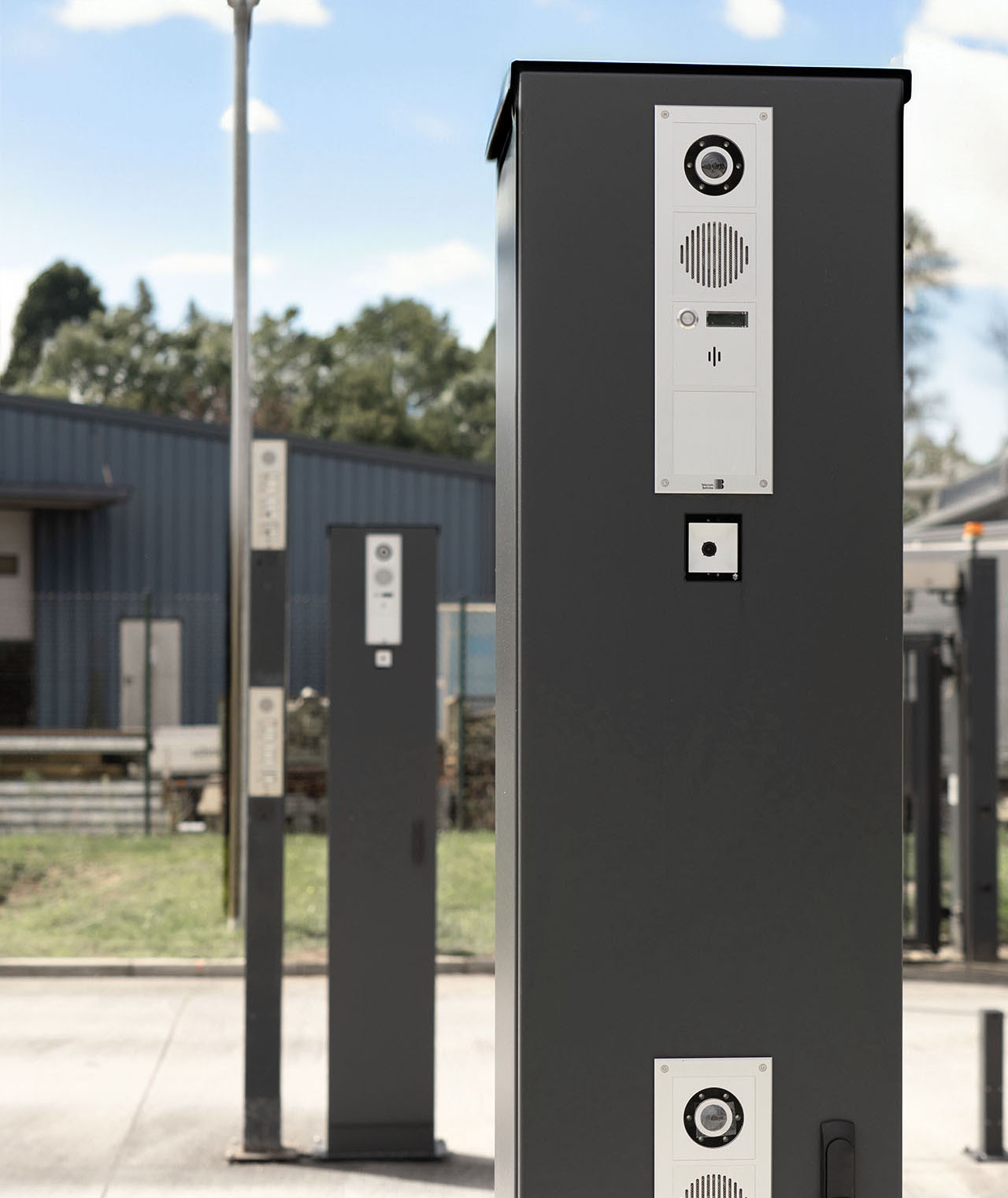
The classic bottleneck starts at the gate. Drivers arrive, register, wait, receive instructions—often manually. With myleo / dsc’s gate and camera solutions, this step changes fundamentally:
- Vehicles are automatically identified via license plate recognition
- Bookings and time slots are matched in real time
- Barriers open automatically upon approval
Check-in is no longer handled by people—it’s driven by system logic.
Benefits of automation:
- Significantly reduced waiting times at the gate
- No dependency on gate personnel
- Increased security through automated validation
- Scalability as transport volumes grow
2. Check-in & Driver Interaction: From Friction to Clarity
Once inside, the next critical step is communication with the driver. This is where self-service terminals come into play. Drivers check themselves in, select their language, and receive all relevant instructions directly. No back-and-forth, no misunderstandings, no unnecessary movement across the site. The hardware becomes the interface between system and reality.
Benefits of automation:
- Fewer communication errors, no language barriers
- Faster check-in processes
- Reduced workload for staff and dispatchers
- Standardized processes regardless of language or experience
3. Truck Weighing: From Manual Step to Integrated Process Logic
Truck weighing is a standard step in many yards—but often still handled manually. Drivers leave the vehicle, data is recorded, and results are transferred into systems with delays.
With integrated scale hardware, this process becomes automated: vehicles are identified, weighing is triggered by the system, and results are transferred directly into the platform. The scale becomes part of a seamless, digital workflow—without media breaks.
Benefits of automation:
- Faster processing at the scale
- No manual data entry
- Error-free, direct system integration
- Full traceability and documentation
4. Yard Navigation: From Chaos to Controlled Flow
As soon as the driver enters the yard, true efficiency is put to the test. Without guidance, chaos quickly arises: wrong docks, unnecessary driving, blocked areas. With IoT hardware combined with the platform, movement becomes controllable:
- Vehicles are continuously tracked
- Status and position are updated in real time
- Systems provide clear instructions for the next step
The yard becomes not only visible—but actively orchestrated.
Benefits of automation:
- Fewer wrong turns and unnecessary movements
- Better utilization of space and docks
- Faster turnaround times
- Full transparency for dispatch and control tower
5. Loading & Unloading: From Blind Spots to Full Visibility
The dock area is another critical point where visibility is often lacking. Which dock is free? Which is occupied? Where are delays occurring? With integrated sensors and hardware, this area becomes measurable:
- Dock status is captured automatically
- Processes are digitally documented
- Deviations become visible instantly
This enables active management of capacity and performance.
Benefits of automation:
- Higher dock utilization
- Faster response to delays
- Reliable KPI data for optimization
- Reduced vehicle dwell times
6. Check-out & Exit: From Manual Handover to Seamless Completion
Even the exit process is often underestimated. Documents must be checked, timestamps recorded, approvals given. With automated gate solutions, this step is also fully digital:
- Vehicles are recognized automatically when leaving
- Status is updated in the system
- Processes are completed and documented
The entire cycle is digitally mapped from start to finish.
Benefits of automation:
- End-to-end documentation
- No manual effort during check-out
- Faster exit without congestion
- Clean data foundation for analytics and reporting
What Makes the Difference? End-to-End Integration
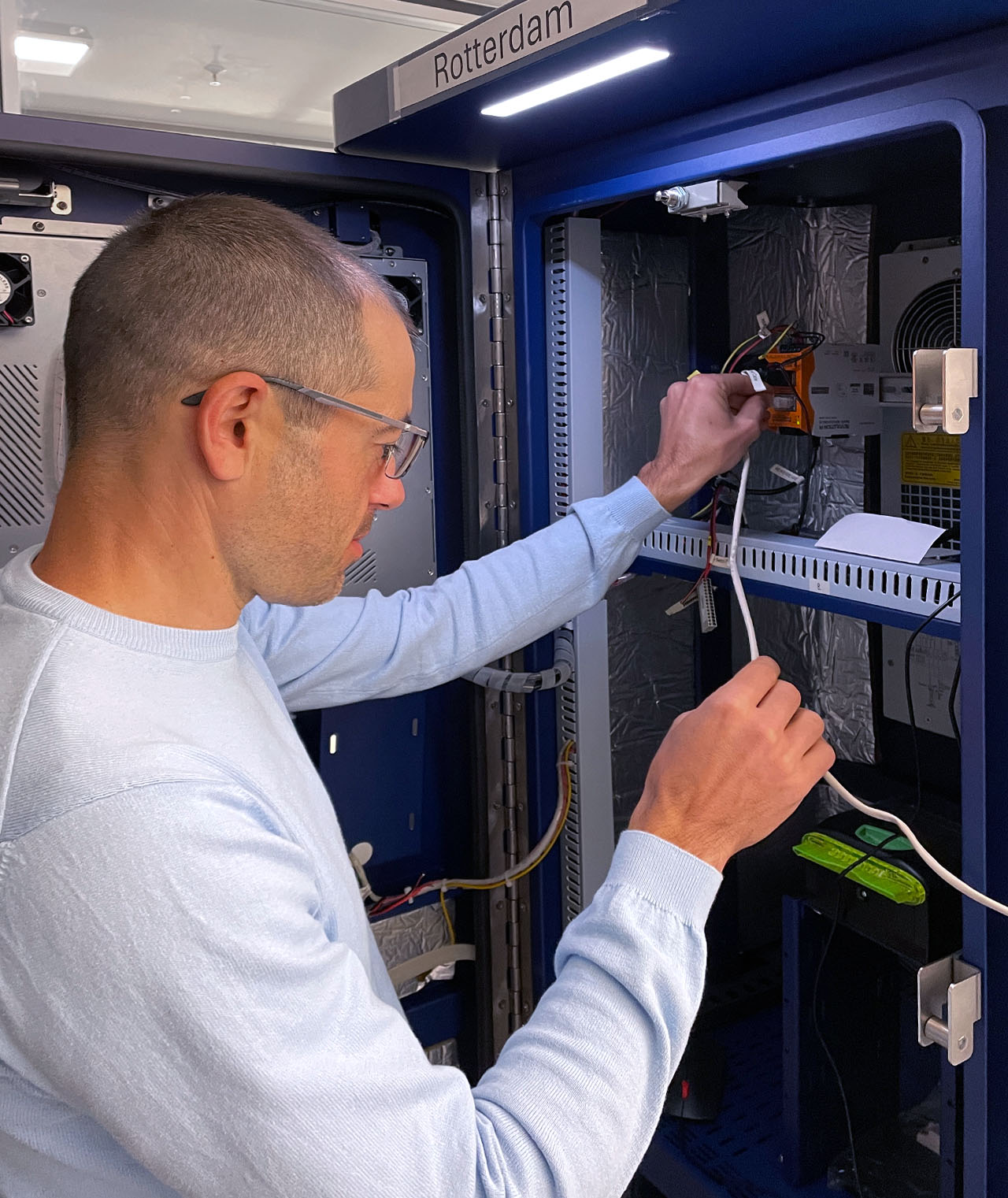
The real value doesn’t come from individual hardware components—but from how they work together. Gate systems, terminals, cameras, and sensors are directly connected to the myleo / dsc platform. Every physical event instantly becomes digital data—and that data drives the next process step.
The yard becomes a closed-loop digital system.
Conclusion: Automation Doesn’t Start in the System—It Starts at the Gate
Many companies try to optimize logistics from the inside out. But the biggest lever often lies outside—right where physical processes begin. IoT hardware ensures these processes no longer rely on manual control but run automatically. Combined with a platform, this creates true end-to-end orchestration. That’s the difference between digital support—and real automation.
You might also like
Cool Efficiency: How Modern IT Solutions Reduce Costs in Cold Chain Logistics
Discover how modern IT solutions can make your cold chain logistics more efficient and reduce costs. Temperature monitoring, IoT and cold chain monitoring for your success.
IoT Logistics: How Sensors and Tracking Are Transforming the Supply Chain
IoT logistics is more than a buzzword. Discover how sensors, tracking, and smart yards are making supply chains more transparent, faster, and more efficient.